Publications
Reading time:
0
min
Point-of-Need Molecular Surveillance in Conflict Zones: Operational Constraints and Architectural Imperatives
Ituri 2026 did not fail because the wrong decisions were made in the moment. It failed because the architecture was designed for conditions that the environment never satisfied — in any of its three fundamental dimensions.
Reading time:
7
min
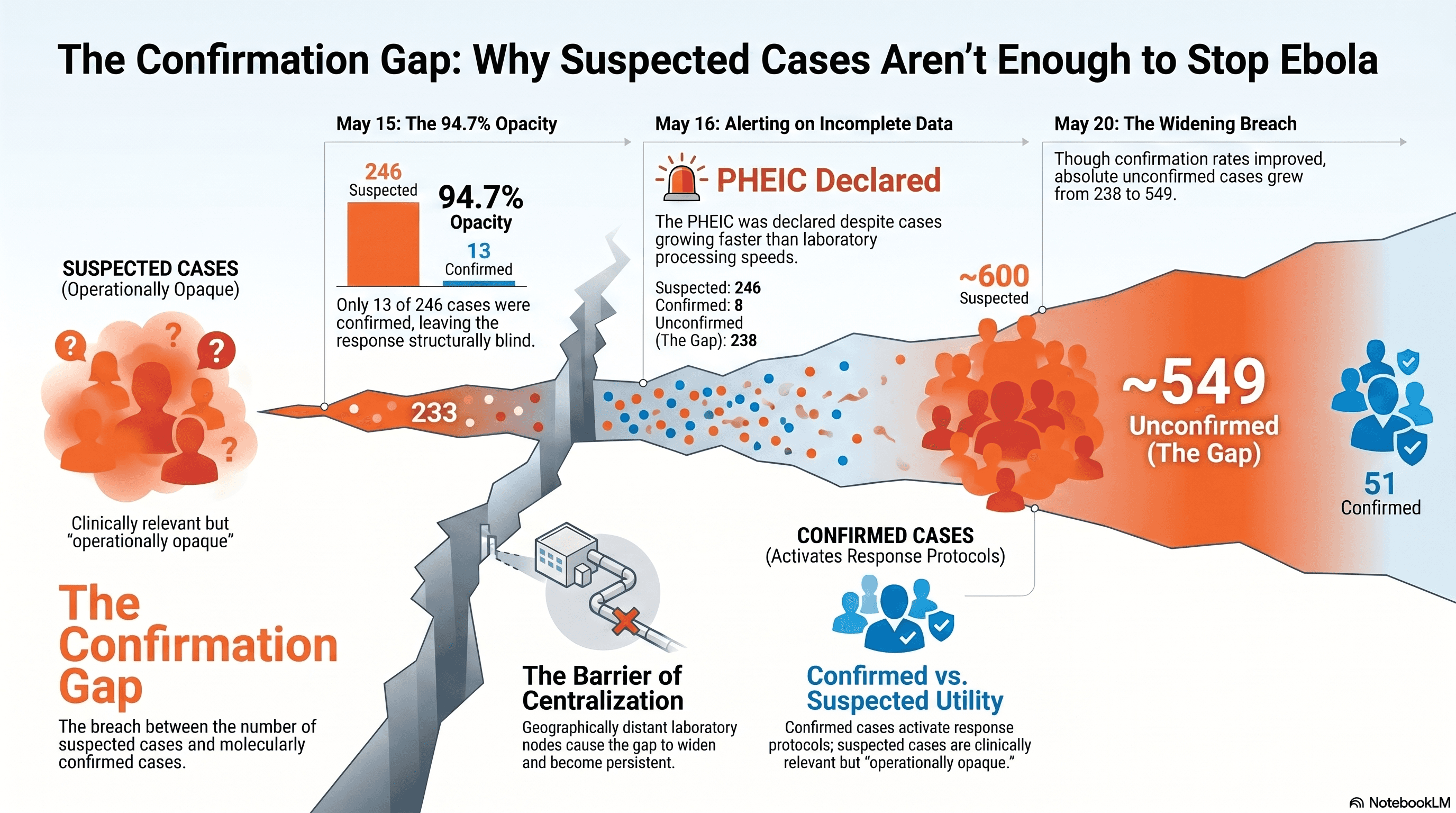
The Confirmation Gap as a Systemic Vulnerability: Epidemiological Data Fragmentation in the 2026 Bundibugyo Outbreak
From 3.2% to 8.5% confirmation rate over four days — while the absolute gap kept widening. How the structural distance between case generation and molecular confirmation determines whether epidemiological traceability can operate at outbreak speed.
Reading time:
7
min
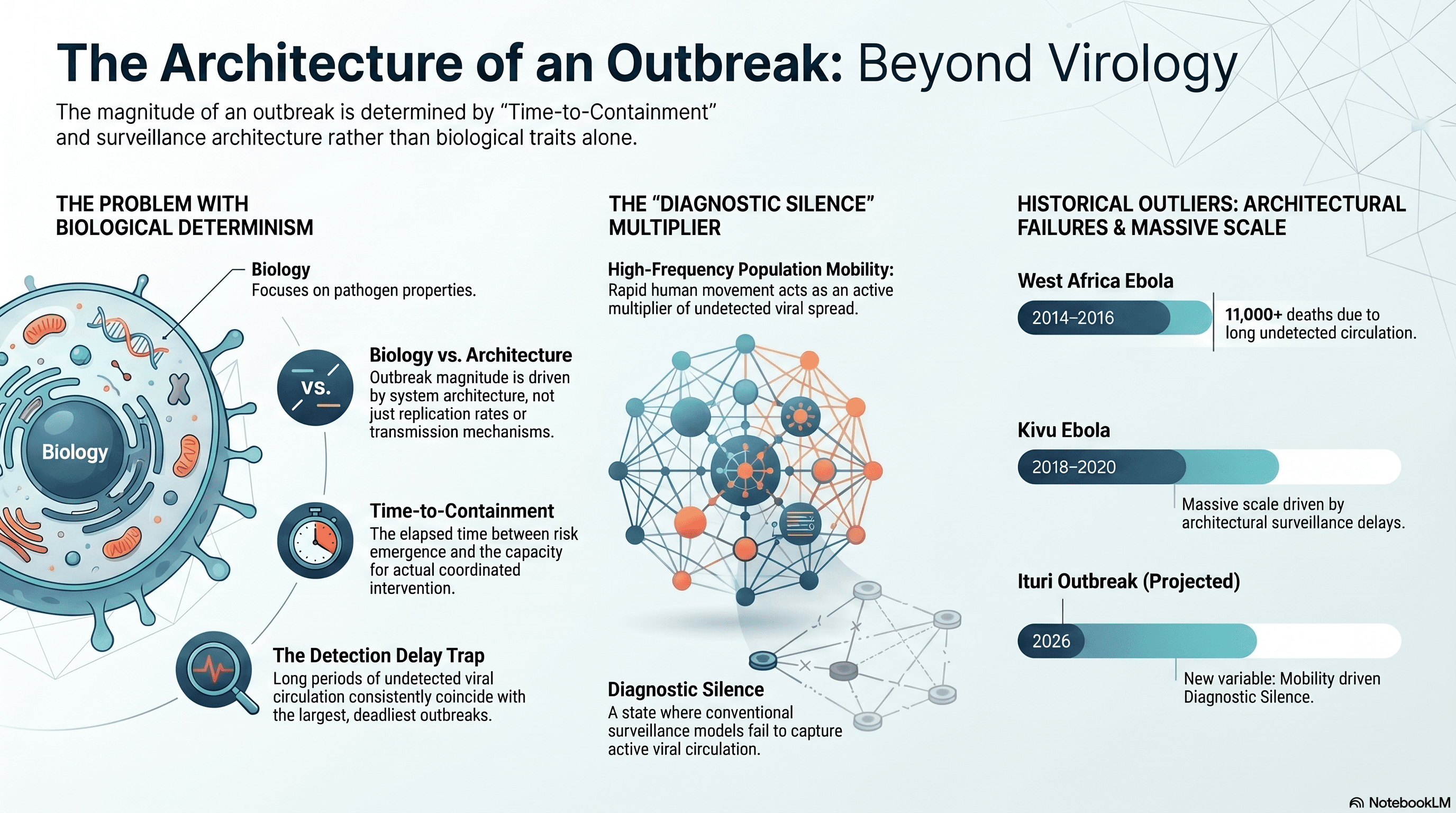
Time-to-Containment in High-Mobility Epidemiological Events: Lessons from the 2026 Bundibugyo Outbreak
How structural delays, mismatched diagnostics and population mobility determined the epidemiological trajectory of the first Bundibugyo PHEIC in history.
Reading time:
5
min
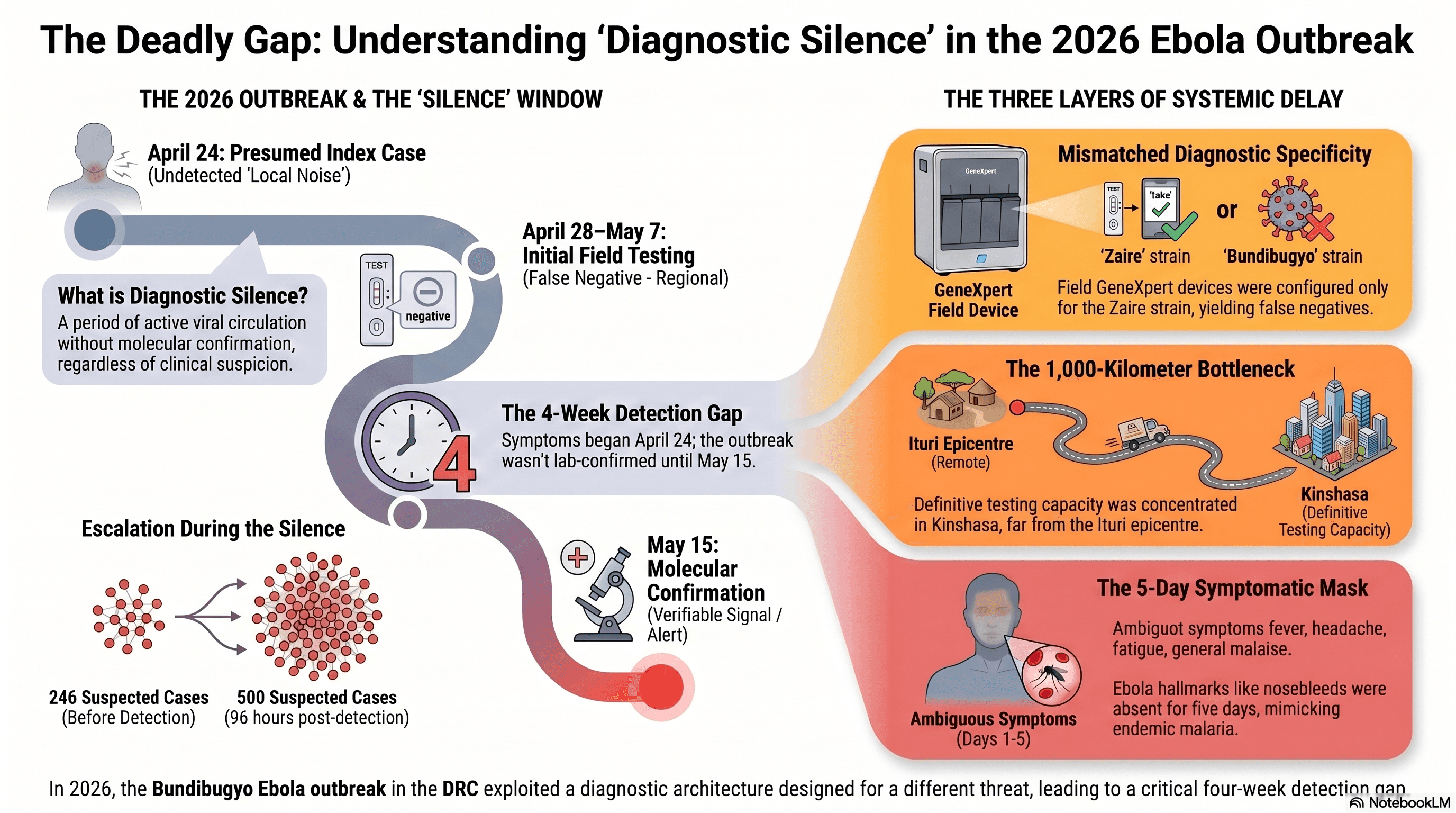
Diagnostic Silence in Ituri: Structural Delays and the Epidemiological Cost of Centralized Confirmation
When field diagnostics are calibrated for the wrong strain and confirmation capacity sits a thousand kilometres from the epicentre, the silence before the alert is not an absence of signal. It is a structural property of the system.
Reading time:
8
min
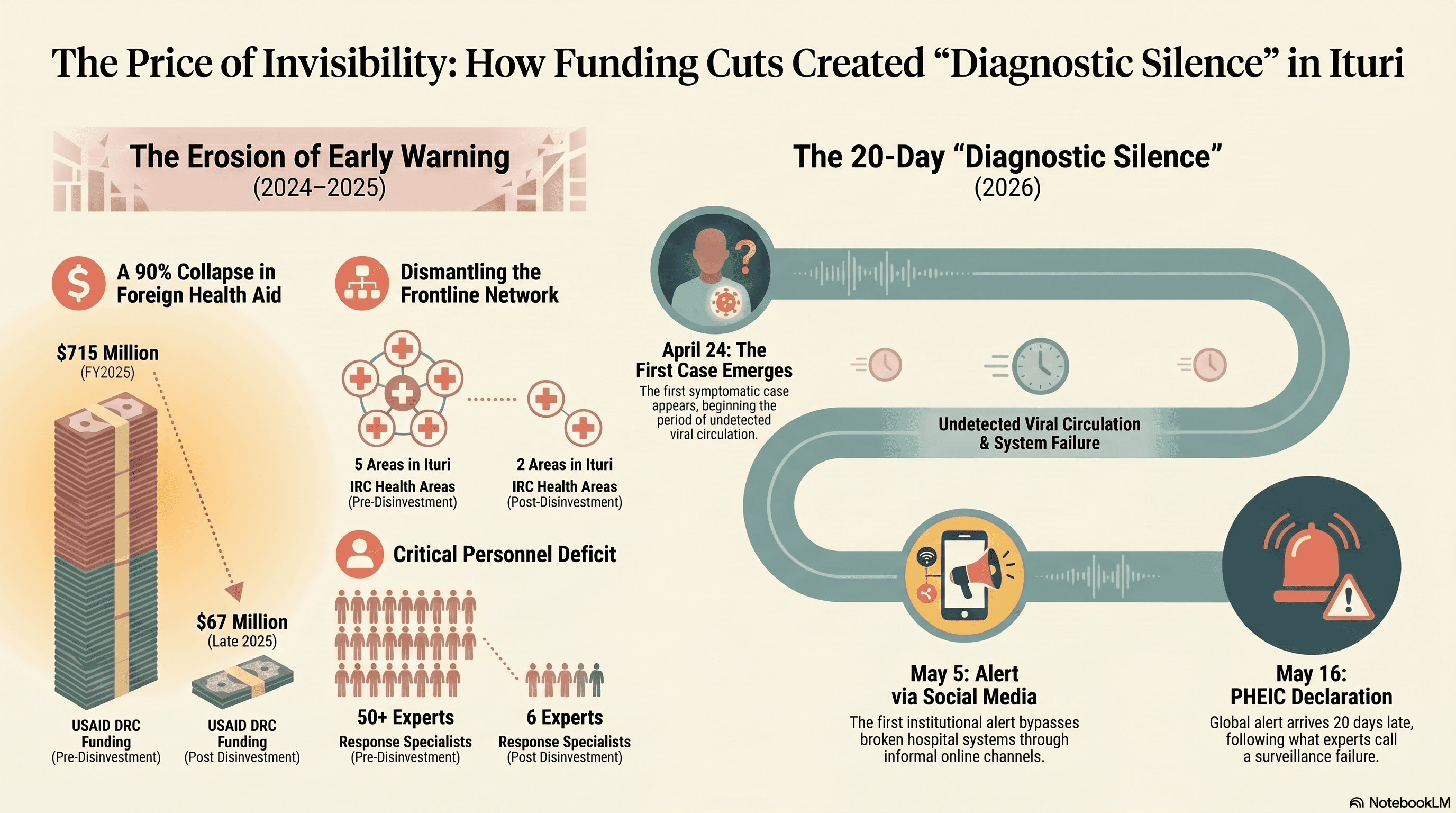
Surveillance Gaps, Institutional Erosion and the Epidemiological Cost of Delayed Alerts: The 2026 Bundibugyo Outbreak as a Systemic Case Study
How documented funding cuts to global health surveillance infrastructure produced a measurable detection delay — and why that interval determines the economic trajectory of outbreak response.
Reading time:
20
min
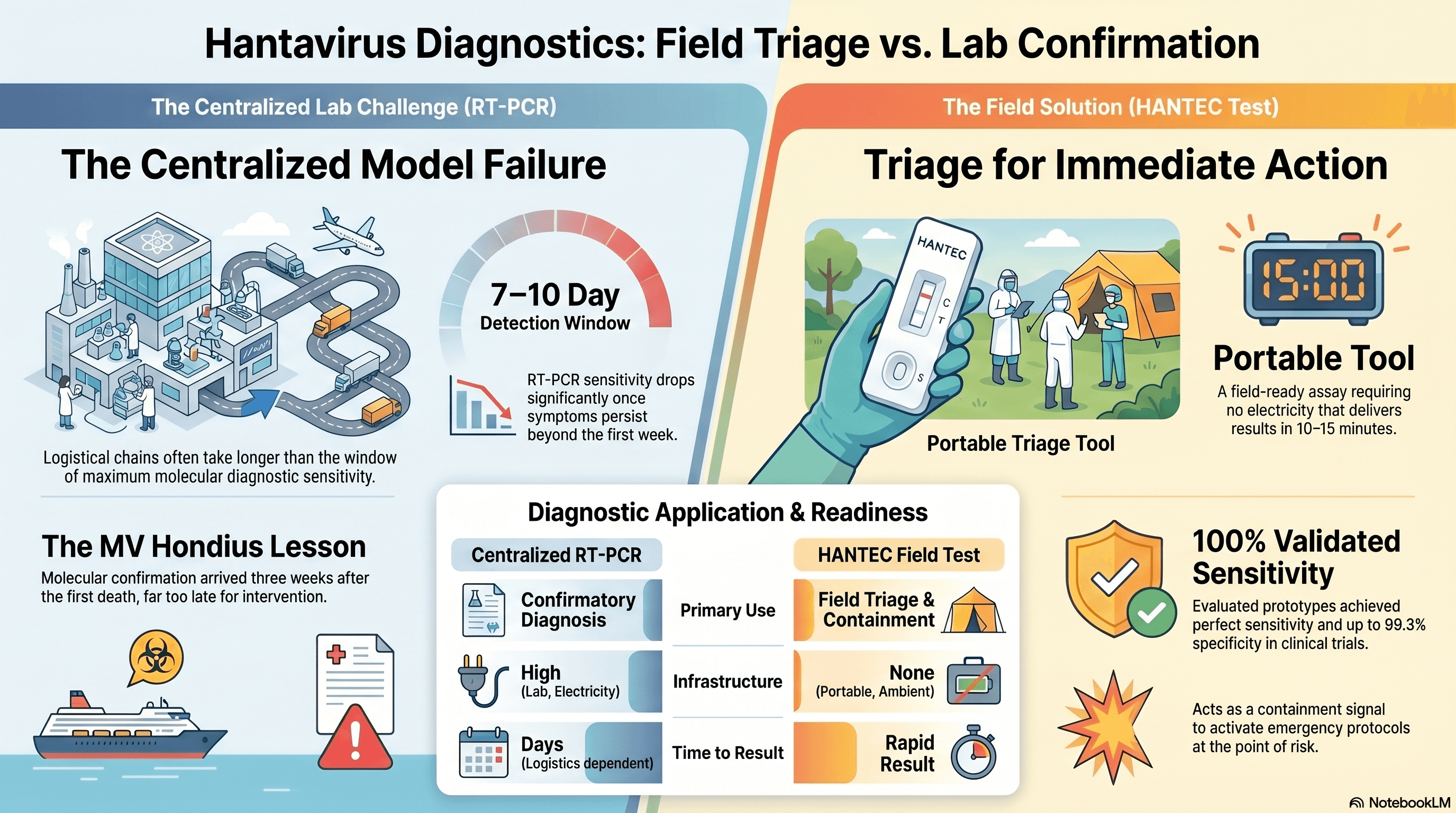
Zoonotic Event Mapping and Operational Traceability: Hantavirus as a Structural Case for Distributed Epidemiological Intelligence
The MV Hondius outbreak exposed a structural gap: diagnostic results existed, but not the integrated traceability architecture to make them operationally useful in time.
Reading time:
16
min
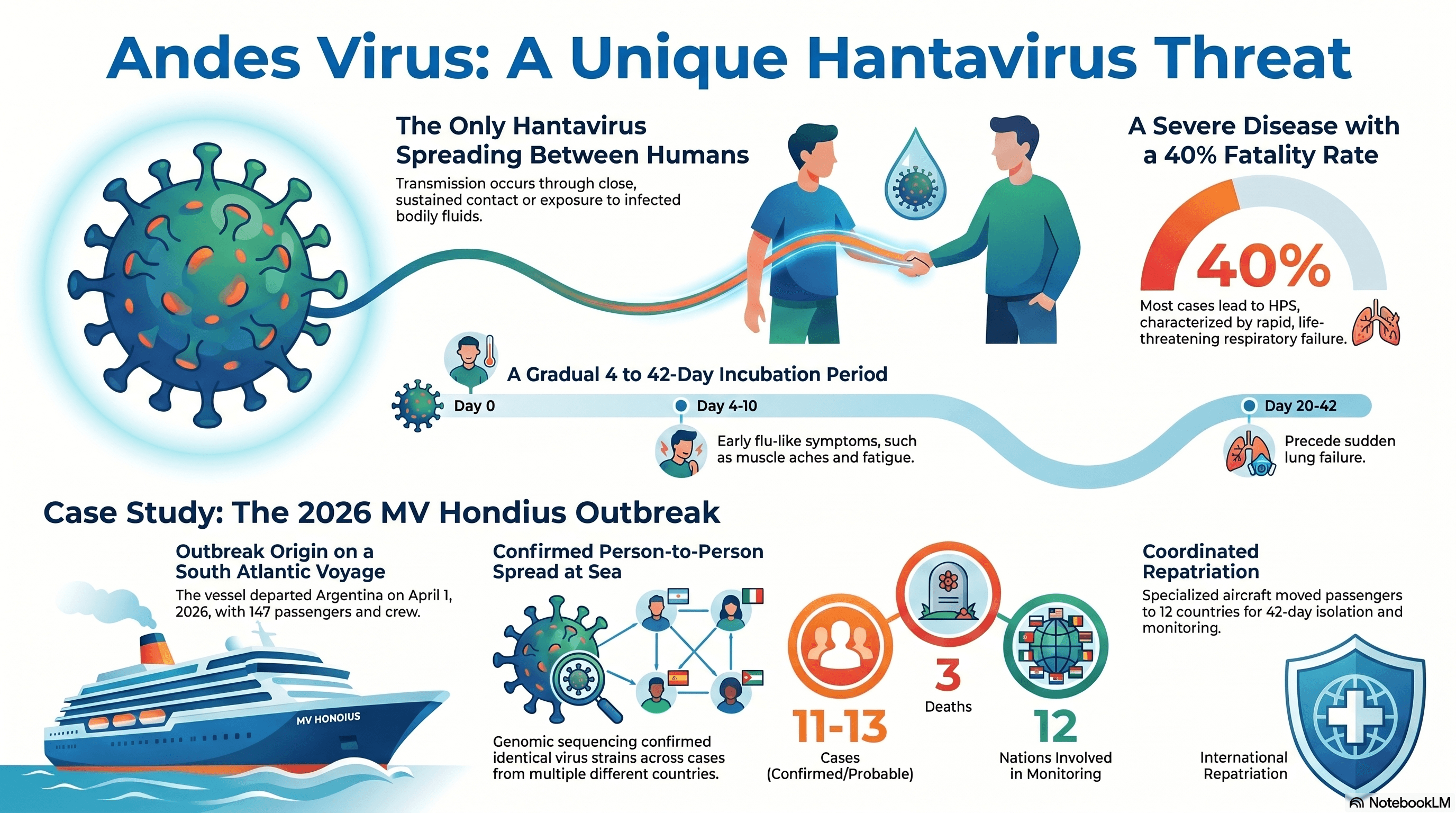
Hantavirus and the Point-of-Need Imperative: Distributed Molecular Surveillance in Ecologically Active Zones
The MV Hondius outbreak revealed a structural gap: diagnostic capacity existed, but not where it mattered. An analysis of distributed molecular surveillance for interface zoonoses.
Reading time:
17
min

Diagnostic Silence at Sea: The MV Hondius Outbreak and the Structural Constraints of Molecular Surveillance in High-Mobility Maritime Environments
Three weeks elapsed between the first death on board the MV Hondius and the molecular confirmation of hantavirus. By then, contacts were already in thirteen countries. A structural analysis of what deferred diagnosis costs in high-mobility environments.
Reading time:
8
min
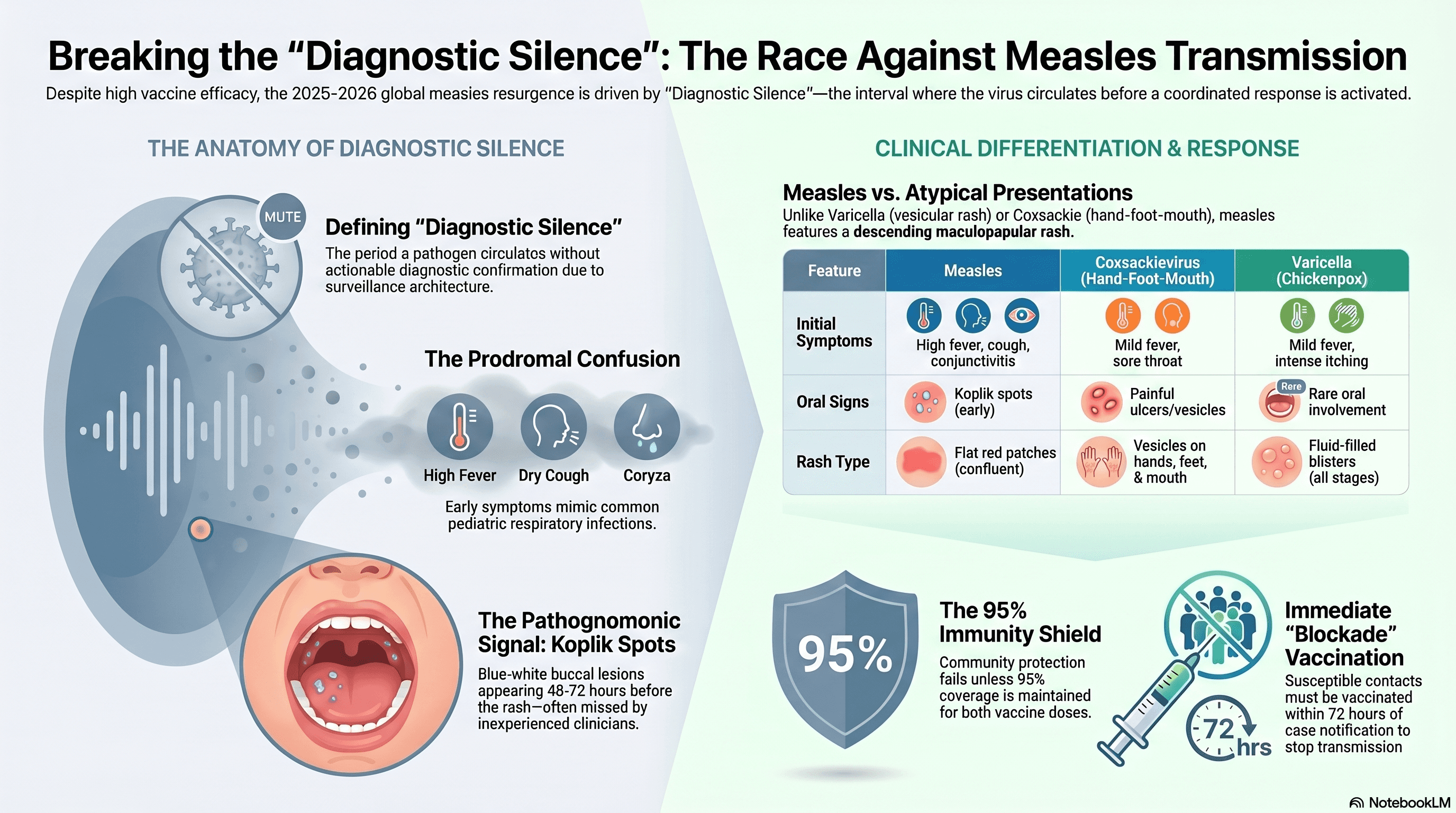
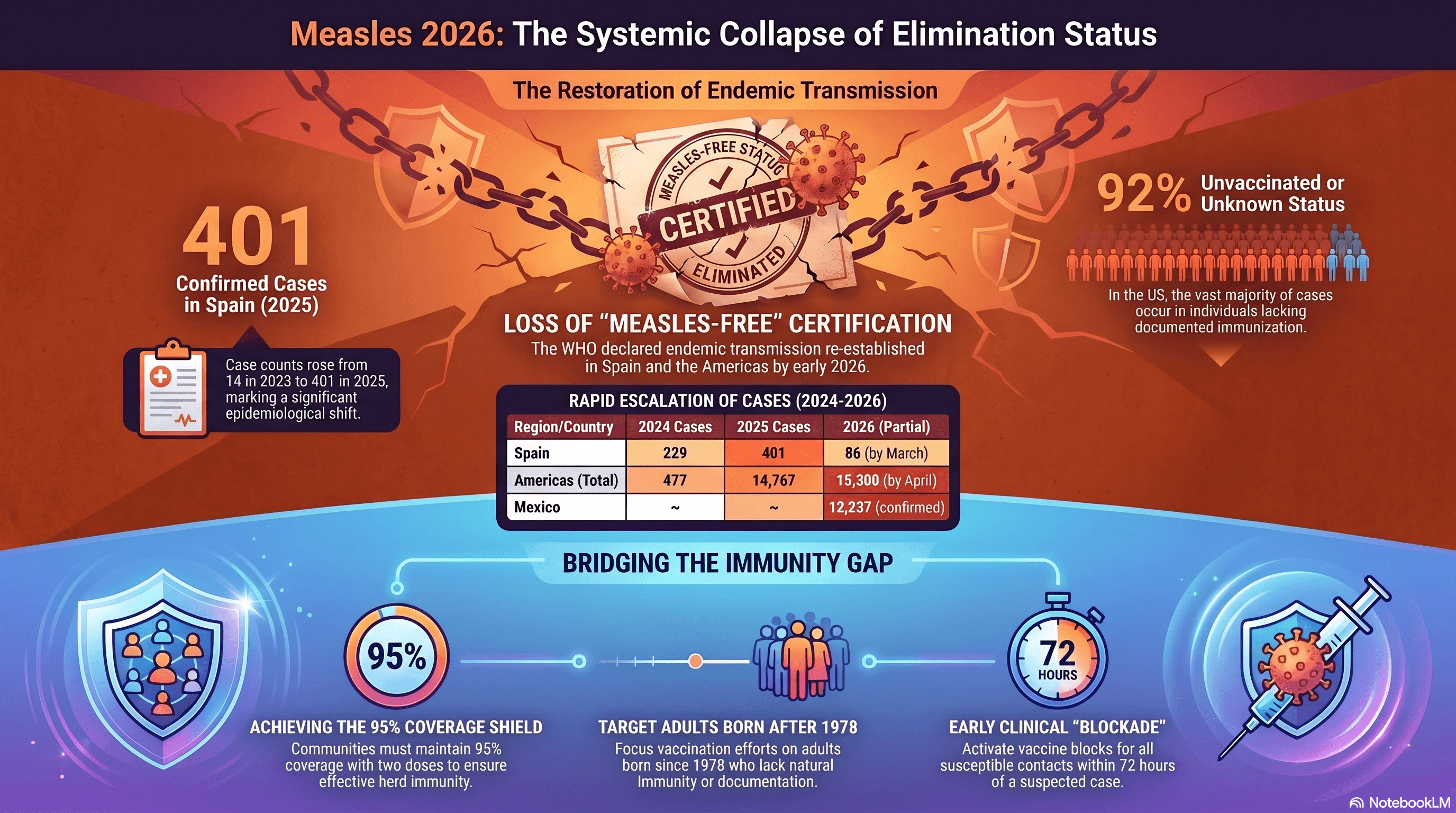
Diagnostic Silence and Measles Resurgence: Confirmation Architecture as a Determinant of Containment Failure
The 2025-2026 measles outbreak was not a failure of available diagnostic tools. It was a failure of the architecture that determines when and where those tools generate their signal.
Reading time:
8
min
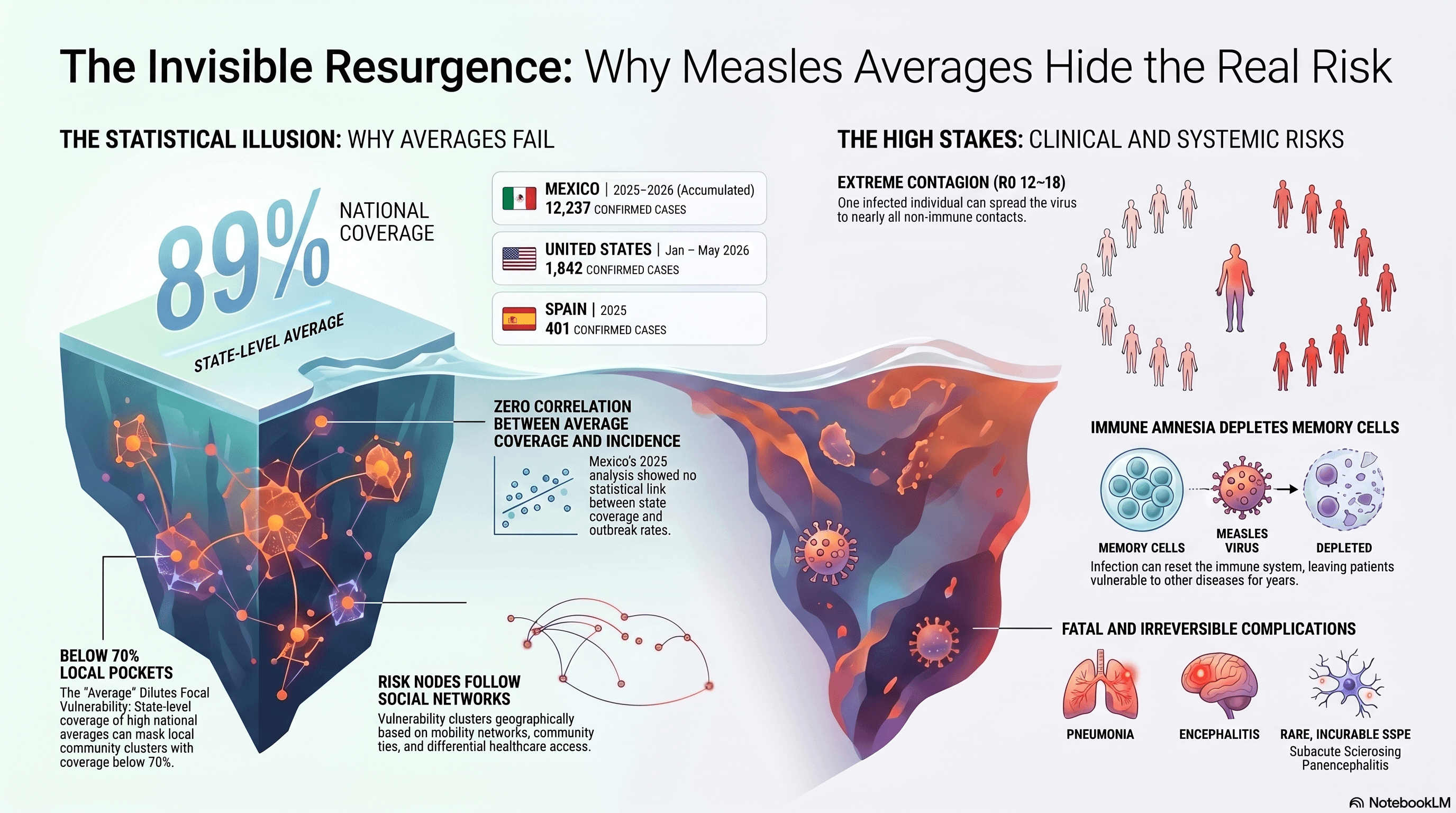
Aggregated Immunity and Subnational Invisibility: Why Vaccination Coverage Averages Fail to Predict Outbreak Vulnerability
Mexico's 2025 measles outbreak confirmed what spatial epidemiology has long suggested: national and state-level vaccination coverage metrics lack the resolution to identify the subnational susceptibility clusters where outbreaks actually ignite.
Reading time:
7
min
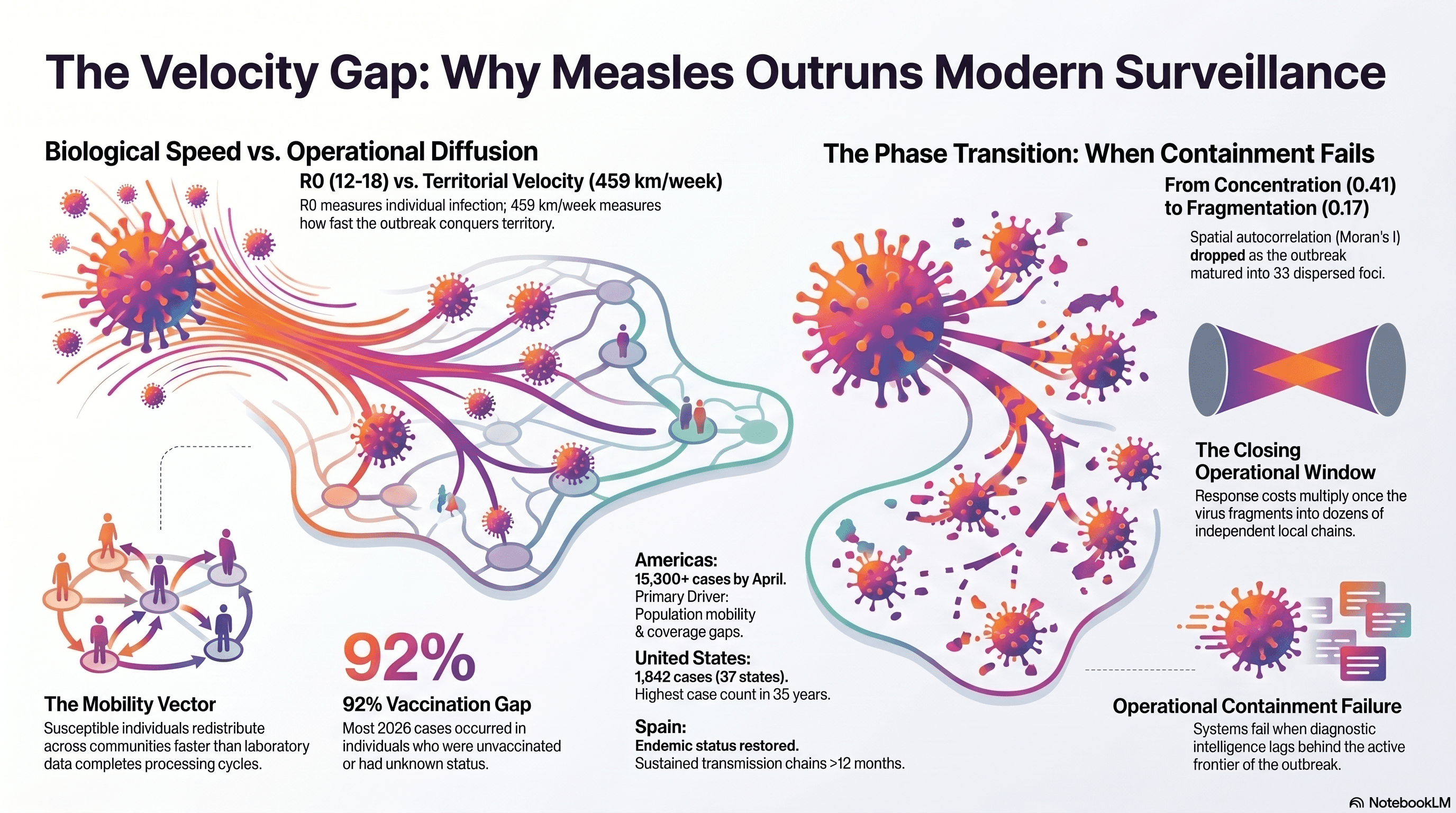
Transmission Velocity and Confirmation Lag: Measles Propagation Dynamics as a Measure of Structural Surveillance Failure
The 2025-2026 North American measles outbreak quantified the gap between pathogen propagation speed and surveillance response time with unusual precision. The structural implications extend well beyond this specific outbreak.